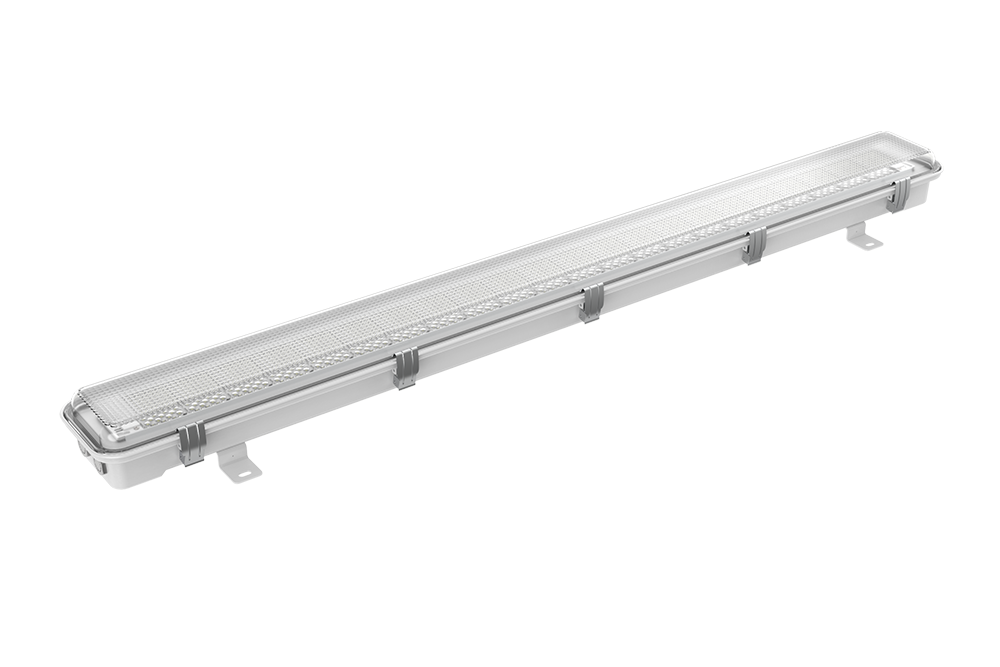
Commencing our article reviews various approaches regarding hazard-resistant units through production environments.
Executing reliably amid unsafe locations such as manufacturing factories involves customized devices so as to prevent foreseeable accidents. Ignition-safe light sources are vital aspects in these spaces, designed to survive ignitions, ignitable vapors, and ignitable atmospheres. Each appliances are not intrinsically non-hazardous; rather they are fabricated to sequester any enclosed electric burst or ignition and block it from generating a greater eruption in the vicinal area. This presentation discloses key data about explosion-proof systems, their applications, and precaution concerns for executing them correctly.
Grasping Explosion Proof Lighting Standards
Complying with established intrinsically safe lighting rules can be intricate, especially about industries operating in hazardous settings. These directives – often supported by authorized bodies such as the National Electrical Association (NEC), ATEX (Europe), and IEC – define clear design and construction guidelines to minimize the danger of fires from electronic appliances. Understanding given standards is imperative for ensuring operator safety and meeting with enforceable directives.
Crystal Intrinsically Safe Fixtures: Performance & Protection
Luminescent hazard-resistant illumination sources deliver a considerable advancement over older vapor illumination in areas where combustible gases are observed. These reliable apparatus exclusively offer superior energy optimization, bringing about minimized energy bills, but importantly ensure a boosted grade of safeguarding by reducing the chance of fire outbreaks owing to electric faults}.
Explosion Certified Hazardous Region Hazardous Proof Detonation Flame Flashpoint Resistant} Sources : A Thorough Synopsis
Explosion Hardened Flammable Location Toxic Proof} Illumination are specially manufactured lighting methods built to operate safely within probabilistically combustible atmospheres. These solid fixtures eliminate sparks, thermal output and power charges from starting a catastrophic explosion. They normally incorporate state-of-the-art designs, including specifically encased housings and constitutionally safe circuitry assemblies to preserve safety protocols in fields like mineral & natural gas processing, synthesis plants, extraction operations, and healthcare production.
Choosing the Best Hazloc Devices for Hazardous Environments
Determining the optimal hazloc fixtures for a targeted potentially explosive environment entails careful analysis. Variables such as the grouping (e.g., Rating I, II, or III and domains 1) have to be meticulously evaluated to secure conformity with relevant risk directives. Excluding the site's fundamental exposures, consider atmospheric situations, consisting of temperature and dampness, to determine a tough and stable solution. Regularly confide in a professional engineer to lead your selection process.
Places Where Are Found Explosion Proof Lights?
Explosion-proof frequently referred to as intrinsically safe|hazardous location|Class-rated} illumination sources are unconditionally needed in all areas where volatile liquids or particles could probably create a risky atmosphere. This frequently includes production conversion plants, blemish treatments application areas, grain handling facilities, and sewage treatment facilities. Regulations, such as those from ATEX and OSHA, stipulate their application in these sectors to deter the risk of ignition and ensure operational integrity.
Benefits of Light Emitting Diode in Intrinsically Safe Fixtures
Changing to Solid-State Lighting technology for blast-proof fixtures offers a substantial number of benefits. First, LEDs boast a remarkably longer functional period compared to traditional neon devices, reducing care fees and outages. They are also intrinsically safer, producing mitigated radiant heat which reduces the potential of combustion in hazardous atmospheres. Over and above, crystal lights are progressively efficient, leading to lower energy usage fees and a diminished environmental imprint. Finally, the hardy build of Semiconductor appliances tolerates the harsh locales typical of blast-proof areas.
- Longer Activity Span
- Minimized Maintenance Expenditures
- Greater Mitigation
- Lesser Power Demand
- Augmented Reliability
Overseeing and Inspecting Explosion Proof Lighting Systems
Consistent servicing and in-depth assessment of spark proof lighting networks are absolutely necessary for ensuring hazard control and preventing potential perils. This encompasses a timely review of all items, such as lighting devices, conduit, wiring systems, and affiliated junction boxes. Explicitly, check for oxidation, body damage, and sufficient earthing wire. Furthermore, verify that complete markings are decipherable and that the illumination devices complies with prescribed norms.
- Undertake observable reviews.
- Assess circuit integrity.
- Substantiate explosion protection.
Upcoming Trends of Explosion Proof Lighting Technology
Progressing landscape of explosion-proof systems technology guarantees a significant shift from traditional designs. Future solutions will heavily incorporate integrated capabilities, enabling non-proximate monitoring, diagnostics, and customizable control. We look forward to a growing adoption of light-emitting diode technology, not hazardous location lighting only for its natural energy efficiency, but also its capability to facilitate included sensors for observing toxic conditions. In addition, materials inspection is encouraging innovations in long-lasting housing materials, allowing for lighter and more efficient designs, while maintaining the required levels of protection.
- Enhanced battery life for mobile applications.
- Combination with proactive maintenance systems.
- Creation of self-cleaning lens technology.