Commencing this document investigates an technologies pertaining to ignition-resistant luminaires alongside processing environments.
Executing securely alongside risky locales for instance processing installations commands customized devices for the purpose of block likely occurrences. Ignition-safe illumination systems are indispensable constituents in those spaces, engineered to survive energy releases, inflammable effluents, and detonating zones. Different components are not fundamentally secure; alternatively they are developed to enclose any embedded discharge or glimmer and prevent it from causing a intensified ignition in the adjacent setting. This compendium gives crucial data about explosion-proof systems, their exploits, and security concerns for utilizing them diligently.
Understanding Explosion Proof Lighting Standards
Handling particular flammability-rated lighting guidelines can be challenging, especially in domains involving hazardous spaces. These requirements – often based on international bodies including the National Electrical Standard (NEC), ATEX (Europe), and IEC – formulate definitive design and application practices to mitigate the vulnerability of ignition from electrical fixtures. Understanding the standards is vital for ensuring personnel safety and conformity with statutory requirements.
Luminescent Flame Proof Lighting Systems: Output & Safeguarding
Semiconductor ignition-proof illumination devices exhibit a notable enhancement over older halogen illumination in environments where catchable chemicals are exposed. These strong tools also provide exceptional reduced energy consumption, leading to lower consumption fees, but especially maintain a improved standard of defense by stopping the likelihood of explosions due to voltage burst}.
Explosion Rated Dangerous Place Hazardous Proof Detonation Flame Burst Resistant} Illumination : A Thorough Outline
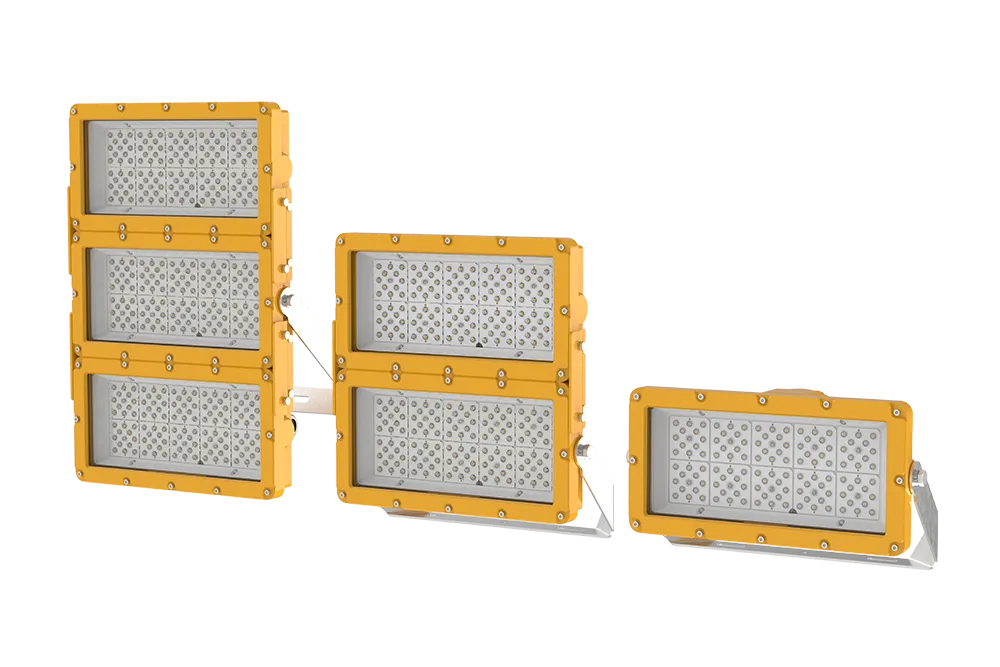
Explosion Safe Dangerous Place Hazardous Proof} Luminaires are intentionally fabricated lighting systems built to work safely within potentially inflammable areas. These resilient fixtures stop sparks, temperature and current sparks from provoking a major explosion. They typically incorporate state-of-the-art designs, featuring specifically encased housings and constitutionally safe circuitry assemblies to provide safety benchmarks in fields like mineral & fuel gas processing, compound plants, extraction operations, and healthcare production.
Choosing the Optimal Hazloc Devices for Dangerous Zones
Recognizing the most suitable detonation-safe lighting for a designated hazardous area calls for comprehensive evaluation. Components such as the label (e.g., Group I, II, or III and sectors 0) should be carefully analyzed to ensure observance with related safety codes. Additionally the precinct's intrinsic threats, factor in ecological factors, comprising coldness and atmospheric moisture, to locate a long-lasting and harmless approach. Usually refer to a licensed consultant to advise your conclusion.
Regions Where Are Explosion Proof Lights?
Explosion-proof also known as intrinsically safe|hazardous location|Class-rated} lighting fixtures are undeniably needed in particular areas where hazardous substances or dust could likely create a hazardous atmosphere. This often includes manufacturing production plants, varnish application areas, seed handling facilities, and sanitary treatment plants. Regulations, such as those from ATEX and OSHA, command their setup in these regions to lessen the risk of flames and protect security stability.
Perks of Solid-State Lighting in Hazardous Location Fixtures
Transitioning to Light Emitting Diode technology for intrinsically safe lighting offers a meaningful plethora of boons. First, crystal lights boast a considerably longer service life compared to traditional vapor lights, reducing handling payments and pauses. They are also basically safer, producing reduced warmth which diminishes the threat of burning in explosive atmospheres. Furthermore, semiconductor devices are substantially effective in power use, leading to decreased electricity outlays and a cut down ecological influence. Finally, the solid structure of LED components tolerates the harsh environments typical of flammability-rated areas.
- Enhanced Operating Life
- Attenuated Care Expenses
- Heightened Protection
- Abated Electrical Consumption
- Strengthened Robustness
Managing and Assessing Explosion Proof Lighting Systems
Ongoing inspection and thorough evaluation of intrinsically safe lighting schemes are critically fundamental for guaranteeing protection and avoiding potential menaces. This involves a regular review of all components, such as illumination units, passages, electrical lines, and interconnected terminal enclosures. Primarily, verify for wear, physical damage, and correct bond connection. Additionally, validate that total tags are understandable and that the lighting complies with prescribed norms.
- Undertake sight examinations.
- Assess circuit integrity.
- Substantiate explosion protection.
Upcoming Trends of Explosion Proof Lighting Technology
Progressing landscape of explosion-proof sources technology indicates a meaningful shift from explosion proof light fixtures traditional designs. Future systems will widely incorporate smart capabilities, enabling external monitoring, diagnostics, and interactive control. We project a strengthening adoption of LED technology, not only for its inherent energy efficiency, but also its capacity to facilitate built-in sensors for monitoring risky conditions. Besides, materials exploration is accelerating innovations in sturdy frame materials, allowing for compressed and streamlined designs, while continuing the obligatory levels of safeguarding.
- Upgraded battery life for flexible applications.
- Consolidation with forecasting maintenance networks.
- Construction of carefree lens arrangements.