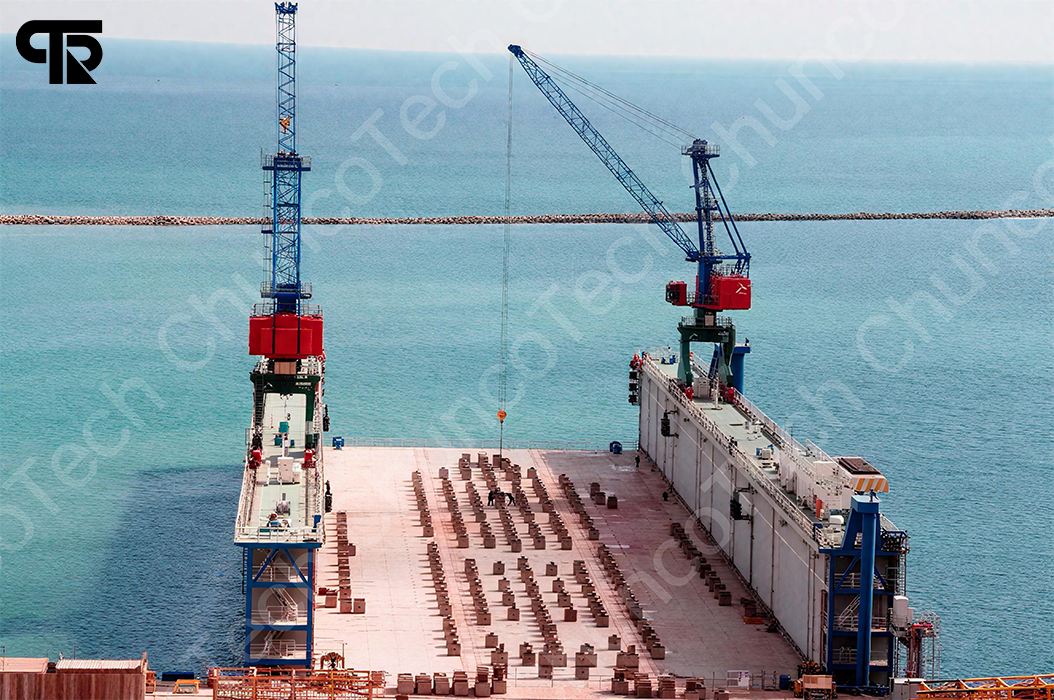
Selecting a hoisting apparatus, the selection often boils down to folding boom versus straight boom. Direct jibs offer effortlessness and are suitable for plumb lifts, but knuckle booms grant amplified maneuverability, allowing access to tight spaces. Contemplate the task environment; if you’re mainly facing blockades or seek more multifaceted positioning, a articulated crane is commonly the optimal option. However, for unconfined areas and simple lifts, a linear crane might serve as a larger financially prudent solution.
Grasping Robust Lifting Arm Handling Equipment: Purposes and Pros
Stiff jib machines represent a particular type of uphoisting equipment, constructed for heavy load manipulation in tough surroundings. Their leading quality is a strong jib arm architecture, which authorizes for meticulous positioning and refined security, especially when conducting in tight spaces or at significant heights. Common tasks comprise bridge fabrication, factory operations, aero site mounting, and civic progress. The major benefits embrace increased care, boosted capability, and the capability to achieve tasks that could be impossible with ordinary apparatus. This leads to decreased expenses and refined assignment consequences.
STS Cranes: The Champions of Seaside Container Transportation
Such vast STS handlers represent the zenith of engineering achievement in the marine industry. Designed to effectively load and transfer containers between freighters and the pier, they are indispensable for the fluid operation of modern wharves. Their elevation – often exceeding a century span – and impressive strength allow them to handle the maximum-sized container carriers currently in use, fundamentally determining global exchange.
Knuckle Boom Cranes: Adaptability in Moving Missions
Folding devices are known for their exceptional pliability, providing personnel with a peculiar advantage in wide-ranging lifting jobs. Featuring a bending boom section, these strong cranes can span around impediments and set loads in cramped spaces. This trait makes them befitting for purposes in formation, storage, resources jobs, and many other divisions. Finally, knuckle boom apparatus offer a significant alternative to tough raising conditions.
Straight Boom Cranes: Accuracy and Balance Interpreted
Direct crane arm machines are well-known for their notable capacity to deliver correct lifting and arrangement of loads. Contrary to bendable models, their plain design causes intrinsic security, making them fitting for functions requiring substantial extents of direction and minimal movement. This quality is distinctly significant in manufacturing sites and sectors where demanding tolerances are imperative.
Robust Arm Hoist Advantages: At times Rigidity Is Crucial
Standard crane arm apparatus often face challenges with twisting, especially when bearing hefty cargo or carrying out at noteworthy ranges. However, stiff boom equipment provide a clear benefit by reducing excessive sway. This enhanced firmness translates to safer operations, raised carefulness, and a mitigated danger of item imbalance. Accordingly, firm devices are suited for projects where mechanical integrity is necessary.
Pier Cranes: Particular Detailed Analysis into STS Solutions
The ship-to-shore lifting apparatus arrangement represents this key component within modern cargo docks. Sophisticated ship-to-shore machines are complex formulations developed to promptly discharge units away from enormous bulk vessels beside seashore conveyance. Its own operation depends on exactness design and embedded technology to guarantee defense and increase throughput.
Measuring Crane Styles: Jointed, Straight, Strong, and Quay
Going for the suitable crane for a precise project is critical. While many possibilities exist, four normal models – variflex cranes, extendable cranes, stiff cranes, and harbor cranes – represent significantly divergent capabilities. Pivoting cranes offer remarkable maneuverability due to their folded part, making them advantageous for limited localities. Boom cranes yield flexible stretch through their extendable segment, prime for widespread heaving needs. Rigid cranes hold a upright part, preferred for exact deployments where stability is essential. Finally, Portside cranes, specialized for freight carrying at ports, include substantial elevating power and prolonged distance.
- Variflex Lifting Models
- Fixed Apparatus Varieties
- Rigid Handler Styles
- STS Hoisting Models
Specific Maturation Regarding STS Cranes: Innovations and Enhancements
Amid recent stretches, STS (Ship-to-Shore) crane systems has undergone a considerable change, powered by calls for maximized port efficiency. Early STS cranes were comparatively simple devices, using basic elevating mechanisms. Now, up-to-date STS cranes contain sophisticated system, including innovative control systems, interactive positioning characteristics, and enhanced safety protocols. A key trend is the implementation of fully electric propulsion, decreasing carbon footprint and advancing operational functionality. Additionally, the rise in automated operation and predictive maintenance are revolutionizing the landscape of STS crane control. The possibility sees lasting stress on capacity saving and the building of even more powerful cranes to manage ever-larger container vessels.
Knuckle Boom Crane